1. الرئيسية
  2. IELTS
  3. الاختبارات التجريبية
  4. Writing
  5. Making drinking water from the sea

IELTS Writing · Task 1

IELTS Academic Writing Task 1: Making drinking water from the sea

  • عملية
  • 20 دقيقة
  • 150 كلمة
  • Academic

ACADEMIC WRITING TASK 1

You should spend about 20 minutes on this task.

The diagram below shows how drinking water is produced from seawater at a reverse osmosis desalination plant. Summarise the information by selecting and reporting the main features, and make comparisons where relevant.

Write at least 150 words.

The main stages at a typical seawater reverse osmosis plant
  1. Intake

    Seawater is drawn in through a pipe, and screens keep out seaweed and other large debris.

  2. Coagulation

    Chemicals are added so that very fine particles stick together in larger clumps.

  3. Filtration

    The water passes through sand filters and then finer cartridge filters, which protect the membranes.

  4. High-pressure pumping

    Powerful pumps raise the water to a very high pressure.

  5. Reverse osmosis

    The pressure forces water through semi-permeable membranes, and most of the salt stays behind. The flow now divides into two.

  6. Brine: energy recovery

    The very salty water left over, called brine, is still under pressure. This pressure is reused to help pressurise incoming seawater.

  7. Brine: return to the sea

    The brine is piped back to the sea and dispersed.

  8. Fresh water: minerals

    Minerals such as calcium are added, because water this low in minerals would corrode pipes.

  9. Fresh water: disinfection

    A small amount of chlorine is added to kill micro-organisms.

  10. Storage and supply

    The drinking water is stored in tanks and then piped to homes and businesses.

الأرقام مفترضة لأغراض التدريب.
20:00
0 / 150 كلمة

قيّم إجابتك

اقرأ الإجابات النموذجية أولاً، ثم اختر لكل معيار الدرجة التي تناسب إجابتك. درجتك هي المتوسط مقرّباً إلى أقرب نصف درجة.

6.0درجتك التقديرية
Task achievement

Coherence and cohesion

Lexical resource

Grammatical range and accuracy

كل نموذج مكتوب كما قد يكتبه مرشح مختلف، لذا تختلف التفاصيل والآراء. الدرجات تقديرنا وفق المعايير المنشورة، وليست تقييمًا رسميًا.

إجابات نموذجية في أربعة مستويات

كُتب كل نموذج كما قد يكتبه مرشح مختلف. والدرجات تقديرنا وفق واصفات الدرجات المنشورة.

نموذج الدرجة 5.5167 كلمة

This diagram shows how a plant makes drinking water from sea.

First, the seawater is taken in by a pipe and screens stop seaweed and other rubish. Next, chemicals are added, so small particles stick together. Then water goes through sand filters and cartridge filters, this protects the membranes. After that, strong pumps give very high pressure to the water.

The next stage is reverse osmosis. Water goes through membranes but most of salt stay behind. Now there are two kinds of water and they seperate. The first one is brine and it is very salty. It has still pressure, and this pressure is used for make energy. Then the brine goes back in the sea.

The second one is fresh water. Minerals like calcium are added, also a small amount of chlorine is added and it kills micro-organisms. Last, the water is kept in tanks and it goes to homes by pipes.

So at the end the salt is removed and people can drink the water.

لماذا هذه الدرجة

  • There is no overview at the start. The general picture comes only in the last line: 'the salt is removed and people can drink the water'.
  • 'First', 'Next', 'Then' and 'After that' carry the sequence, so every stage gets one flat sentence.
  • One stage is misread: 'this pressure is used for make energy'. The diagram says the pressure is reused to help pressurise incoming seawater, and no new energy is made.

معيارًا بمعيار

Task achievement
Every stage appears in the right order and the two streams are kept apart. There is no grouping, though, and the energy recovery stage is wrong.
Coherence and cohesion
The diagram supplies the plan, and the paragraphs break sensibly at reverse osmosis. The links are mechanical, and 'The first one' and 'The second one' have to stand in for the names of the two streams.
Lexical resource
Most words come from the diagram. 'other rubish' and 'give very high pressure' show the limit of the writer's range, and 'seperate' and 'rubish' are misspelt.
Grammatical range and accuracy
About half of the sentences have an error, mostly small words and agreement: 'from sea', 'most of salt stay' and 'used for make'. Comma splices appear in 'cartridge filters, this protects' and 'are added, also', and the word order slips in 'It has still pressure'. Simple passives such as 'chemicals are added' are sound.

للوصول إلى الدرجة التالية

Add one sentence after your introduction saying that the water is cleaned, pushed through membranes and then split into two. Then check the noun before each verb: 'most of the salt stays'.

خطط قبل أن تكتب

ما الذي يطلبه السؤال

This is a sequence with a fork in it, and the fork is the trap. At the membranes one flow becomes two: brine, which goes back to the sea, and fresh water, which goes on to the taps. Candidates who keep writing in one straight line end up adding minerals to the brine. The topic is the other trap. Water shortage invites a comment on drought or cost, but the diagram says nothing about either, and any figure for pressure or salt would be invented. Plants differ in their details, so report this diagram and do not bring in others.

نظرتك العامة

Seawater is cleared of solids and pushed through membranes at high pressure, and the flow then divides: the salty brine returns to the sea, while the fresh water is treated further and supplied to users.

فقرة بفقرة

  1. IntroductionOne sentence in your own words: what goes in, what comes out, and where.
  2. OverviewThe cleaning before the membranes, and the split into two streams.
  3. Before the membranesIntake, coagulation and filtration, then the high-pressure pumps and reverse osmosis itself.
  4. After the membranesOne stream at a time: the brine, with its energy recovery and return to the sea, then the fresh water, with minerals, chlorine, storage and supply.

أخطاء شائعة

  • Carrying on in a straight line after reverse osmosis. One flow becomes two at that point, so minerals and chlorine go only into the fresh water, never into the brine.
  • Saying that the filters remove the salt. Sand and cartridge filters take out solid particles. The salt is left behind only at the membranes.
  • Leaving out the pumps, or saying that the membranes simply filter the water. High pressure is what forces the water through, so pumping has to come before the membranes in your answer.
  • Saying that energy is produced at the energy recovery stage. No new power is made: the pressure left in the brine is reused to help pressurise incoming seawater.
  • Adding figures for pressure, salt or daily output, or comments on drought and cost. The diagram gives none of these, and the task is only to report what it shows.

مفردات الموضوع

intake
the place where water is taken into a plant
debris
loose pieces of unwanted material
clump
a small group of things stuck together
semi-permeable
letting some substances pass through, but not others
membrane
a very thin sheet that acts as a barrier
reverse osmosis
using pressure to force water through a membrane, leaving dissolved salts behind
brine
water containing a lot of salt
to pressurise
to put a liquid or gas under high pressure
to corrode
to damage metal slowly through a chemical reaction
to disperse
to spread out over a wide area

عبارات مفيدة

  • The process falls into ... main parts: ..., ... and ...
  • ... is drawn in through ..., where ...
  • ... are added so that ...
  • ... is forced through ..., which hold back ...
  • At this point the flow divides into ... and ...
  • The ... left behind is ..., while the ... goes on to ...
  • ... is reused to help ...
  • Before reaching ..., the water is ...

أيقونة تطبيق Fleydo IELTS Fleydo: التحضير لـ IELTS

خذ هذه الاختبارات معك على هاتفك

كل اختبار في هذه الصفحات موجود أيضاً في تطبيق Fleydo: التحضير لـ IELTS على iPhone و iPad و Android، ومعه 2,000 كلمة لاختبار IELTS مع الصوت.

  • يعمل دون اتصال بعد تنزيل الاختبار على هاتفك
  • 2,000 كلمة لاختبار IELTS مع الصوت، وتكرار متباعد وتدريبات قصيرة
  • سجّل إجاباتك في Speaking واستمع إليها من جديد
  • خطة يومية بحسب درجتك المستهدفة وتاريخ امتحانك
نزّله من App Storeاحصل عليه من Google Play
امسح الرمز للتنزيليفتح App Store أو Google Play بحسب نوع هاتفك.

لا حاجة إلى حساب. عن التطبيق

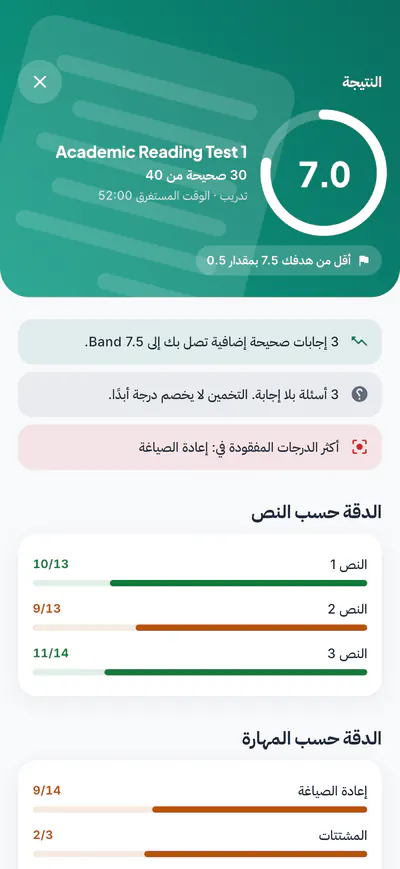
نتيجة اختبار IELTS تجريبي في تطبيق Fleydo: التحضير لـ IELTS: الدرجة التقديرية والدقة في كل جزء
درس تجريبي مجاني

اعرف درجتك الحقيقية في IELTS قبل الامتحان

درس فردي مجاني عبر الإنترنت مع معلم متحدث أصلي للإنجليزية، متخصص معتمد في IELTS بدرجة 8.5+. تحصل على تشخيص لقسم Speaking بالصيغة الحقيقية للامتحان، وتقدير صادق لدرجتك، وخطة تركز على المعايير التي تخسرك العلامات بالضبط. بدون دفع وبدون التزام.

عبر الإنترنت · فردي · Academic وGeneral Training

IELTS علامة تجارية مسجّلة لكل من British Council و IDP: IELTS Australia و Cambridge University Press & Assessment. هذه الاختبارات التجريبية من إعداد Fleydo، ولم تعتمدها هذه الجهات ولم تؤيدها.

تطبيق الهاتف

Fleydo English School في جيبكم

الدروس والواجبات والرسائل والألعاب لطلاب Fleydo وأولياء أمورهم. مجاني على iPhone وAndroid.

نزّله من App Storeاحصل عليه من Google Play
المزيد عن التطبيق
رمز QR يفتح تطبيق Fleydo English School في App Store أو Google Playامسحوا الرمز للتحميليفتح المتجر المناسب لهاتفكم.fleydo.com/app
أيقونة تطبيق Fleydo IELTS
Fleydo: التحضير لـ IELTS

هل تستعدون لاختبار IELTS؟

«Fleydo: التحضير لـ IELTS» تطبيق منفصل يضم اختبارات تجريبية في المهارات الأربع، ولا يتطلب استخدامه حساب Fleydo.

المزيد عن تطبيق IELTS
نزّله من App Storeاحصل عليه من Google Play
اختبارات IELTS تجريبية

تدريب على مهارات IELTS الأربع كلها

اختبارات عددها 311، مع درجة فورية وشرح للإجابات وإجابات نموذجية. بلا تسجيل.

كل الاختبارات التجريبية
FleyPath

خريطة طريق شخصية لطفلك — 3 أو 6 أو 12 شهرًا

🚀البداية
👋Hello
😊Body
🦁Animals
🔢Numbers
🏆إنجليزية واثقة
تدريب على الإنجليزية بأسلوب الألعاب

مثل اللعبة — لكنهم يتعلمون فعلًا