1. الرئيسية
  2. IELTS
  3. الاختبارات التجريبية
  4. Speaking
  5. اختبار IELTS Speaking التجريبي 39: Art in public

IELTS Speaking

اختبار IELTS Speaking التجريبي 39: Art in public

Describe a piece of art in a public place, such as a statue, a mural or a sculpture, that you have noticed.

  • 3 أجزاء
  • 11–14 دقيقة
  • الممتحن
  • أربعة مرشحين واختبار واحد

أدِّ الاختبار

تُسمَع أسئلة الممتحن واحداً تلو الآخر. أجب بصوت مسموع كما في الامتحان. التسجيل اختياري ويبقى في علامة التبويب هذه في متصفحك.

تُحفظ تسجيلاتك في علامة التبويب هذه فقط، ولا يُرفع أي شيء. نزّلها إن أردت الاحتفاظ بها.

قيّم أداءك

قارن إجاباتك بإجابات المرشحين، ثم اختر لكل معيار الدرجة التي تناسبك.

6.0درجتك التقديرية
Fluency and coherence

Lexical resource

Grammatical range and accuracy

Pronunciation

كل مرشح متحدث مختلف، لذا تختلف القصص والآراء. المستويات تقديرنا وفق الواصفات المنشورة، وليست درجات رسمية من ممتحن. لا يُظهر النص المكتوب النطق. تفترض هذه المستويات أنه في مستوى المعايير الثلاثة الأخرى نفسه.

الأسئلة وبطاقة الموضوع والإجابات النموذجية

الجزء 1: المقابلة

Work or studies

  • Do you work or are you a student?
  • What do you enjoy most about it?
  • Who do you spend most of your time with there?
  • Would you recommend it to a younger friend or relative?

Homework

  • Did you get a lot of homework when you were at school?
  • Where did you usually do it?
  • Did you ever leave it until the last minute?
  • Do you think children these days get too much homework?

Pets

  • Did your family have any pets when you were growing up?
  • Which animals do people usually keep as pets where you live?
  • If you could have any animal as a pet, what would you choose? (Why?)

نصائح

  • Three of the homework questions are about your school days, so this frame is mostly past tense: we had to, I used to, my mother would. Add one real detail, such as the table you worked at or the subject you always left until last, and stop.
  • You do not need to have had a pet. 'No, we lived in a small flat and my father didn't like animals' is a full answer, and you can talk about an animal a relative or neighbour had.
  • After you say what you do, the examiner calls it 'it'. Keep your details the same all the way through: if you said you are a student, you are still a student when you talk about the people you spend time with.

الجزء 2: الحديث الطويل (بطاقة الموضوع)

Describe a piece of art in a public place, such as a statue, a mural or a sculpture, that you have noticed.

You should say:

  • where it is and what it looks like
  • how you came to notice it
  • what other people seem to think of it

and explain whether you think the place is better with it there.

سؤال متابعة

  • Have you ever taken a photo of it?
  • Do you usually notice art when you're walking around a town?

ملاحظات قد يدوّنها مرشح قوي

  • bronze woman on bench, reading, park
  • pass it going to the gym
  • noticed when someone put a scarf on her
  • kids sit on her lap, tourists
  • council paid, neighbours complained at first
  • now people sit next to her
  • better? yes, park feels less empty

نصائح

  • It does not have to be famous or beautiful. A painted wall, a sculpture outside an office or a shopping centre, a decorated bridge or painted electricity boxes all count. If nothing comes to mind, walk your daily route in your head.
  • The third point is about other people. You can report what someone said to you, describe what people do near it, or say that nobody seems to notice it at all. That last answer is interesting too, if you say why.
  • The explain line is about the place, not only the art. Picture the spot without it: what would be missing, or would it look better empty?

الجزء 3: النقاش

Paying for art in public places

  • Why do some people feel that public money shouldn't be spent on art? الشرح
  • Is it better for public art to be paid for by the town or by private companies? المقارنة
  • What kind of public art do you think people will want to see in the future? التكهن بالمستقبل

Art at school

  • Should children's drawings and paintings be given marks, like work in other subjects? إبداء الرأي
  • Is it a good idea for schoolchildren to help paint murals on school walls or in their neighbourhood? الموازنة والتقييم
  • How could art lessons be made more useful for children who aren't going to be artists? تقديم الاقتراحات

نصائح

  • Nobody expects you to know what a statue costs. Argue from what you have seen: a street that needs repairs, a sculpture nobody looks at, a wall that made a corner feel safer.
  • For the question about the future, start from something you can already see beginning, such as screens, art built into bus stops, or statues of new kinds of people, and say why it might spread.
  • The school questions invite a story from your own school days. Tell it briefly, then say whether you think it is true for children in general.

أربعة مرشحين واختبار واحد

كيف أجاب متحدثون في أربعة مستويات عن كل سؤال.

Part 1Do you work or are you a student?

I work. I'm working in a shop for wedding dresses, and soiree dresses also, for the engagement and the parties. It's in Tanta, ten minutes walking from my house.

Part 1What do you enjoy most about it?

When the bride tries the dress and she sees herself in the mirror, her face changes, completely. Sometimes her mother cry also. This moment, I like it very much.

Part 1Who do you spend most of your time with there?

Two people, mostly. The owner, she's a woman around fifty, very strict but kind. And another girl who working with me, er, we are friends now. We eat lunch together in the small room behind the shop.

Part 1Would you recommend it to a younger friend or relative?

Hmm... for a girl, yes, maybe. But the salary is not – is not so good, and you stand all the day. My cousin asked me last month for work there, and I told her, no, first finish your study.

Part 1Did you get a lot of homework when you were at school?

Yes, a lot. Every teacher gave us homework, every day, and the copybooks... my bag was so heavy, um, my back was hurting. Especially in preparatory school.

Part 1Where did you usually do it?

In the living room, all of us, me and my two brothers, around the small table. And the TV was open, er, my father was watching the news, so it was not easy to... to concentrate.

Part 1Did you ever leave it until the last minute?

Sometimes, yes. The maps for geography, um, you have to colour the map and write the cities. I hated it, so I leave it to the end, and in the morning I do it very fast, at breakfast.

Part 1Do you think children these days get too much homework?

Yes, I think. My little brother, he's thirteen, he finishes school at two, and after that private lessons, and homework... until eleven in the night sometimes. It's too much for a child.

Part 1Did your family have any pets when you were growing up?

Not really pets. My grandmother in the village, she has ducks and chickens on the roof, but this is for eating. When I was small I gave them names, er, and she was laughing at me.

Part 1Which animals do people usually keep as pets where you live?

Cats, many cats. In the street also, the people put food for them outside the door. Dogs are not so common, some young people have now. I'm afraid of dogs, all of them, even small.

Part 1If you could have any animal as a pet, what would you choose? (Why?)

A bird, I think. A small yellow bird, the one that sings... I forget the name. Because it's easy, not need to take it outside, and the sound is nice in the morning.

Part 2Describe a piece of art in a public place, such as a statue, a mural or a sculpture, that you have noticed.

OK. Er, there is a wall in my street, the wall of a primary school, and last year some students from the university, art students, they came and painted it. Before, it was very ugly, grey, with old papers and, er... writing on it, bad words sometimes. Now it's full of colours. There is a big tree in the middle, and, um, children sitting under it, and a girl reading a book. And on the side there is a river with a boat, the small boat with the... the white cloth, for the wind. I noticed it because I pass there every day to my work, so one day I see the students with the paint and the ladders, and I stopped to watch. They work there maybe... two weeks. The people in my street, I think they like it. The old man who has the kiosk, he says now the street is more clean, because nobody throws rubbish near the wall. But my mother say it's for children, it's not real art. And after one summer, the sun made the colours... weak, especially the blue, and nobody come to paint it again. But for me, er, the street is better now. Before it was only grey, and the papers, so...

Part 2Have you ever taken a photo of it?

Yes, one time, with my friend, in front of the tree. I have it still on my phone.

Part 2Do you usually notice art when you're walking around a town?

Not really. I'm always walking fast to the work, so... I look at the shops more.

Part 3Why do some people feel that public money shouldn't be spent on art?

Because, er, there is more important things. The streets – in my city some streets are very bad, with holes, and the hospitals need money also. So the people say, er, why you spend on a statue? Fix the street first. I understand them, I think the same, a little.

Part 3Is it better for public art to be paid for by the town or by private companies?

The town, I think. Because the street is for everybody, so... everybody pay, er, with the taxes. If a company pays, er, they want something back, they don't give the money for – just for nothing. Maybe they put their name, or, um, the art is about their product. I don't like this.

Part 3What kind of public art do you think people will want to see in the future?

Hmm, I don't know. Maybe, um, statues of the famous people now, like the football players, or singers. Not only the old kings, the... the history people. The young people want to see somebody they know, er, somebody from now.

Part 3Should children's drawings and paintings be given marks, like work in other subjects?

Er... no, I don't think so. In my school the drawing – we have marks for drawing, but very small, and the teacher give everybody almost the full mark. If it's like maths, er, the children who can't draw, they will feel bad, and maybe they start to hate the school. Drawing is for enjoy, not for exam.

Part 3Is it a good idea for schoolchildren to help paint murals on school walls or in their neighbourhood?

Yes, it's good idea. Er, the children will be proud, they will say to everybody, this is my painting, I did it. And they learn to work together, er, in a group. But the small ones, maybe they make a mess... so the teacher must stay with them all the time.

Part 3How could art lessons be made more useful for children who aren't going to be artists?

Um... this is difficult question. Maybe they learn things for the life, er, like which colours go together, for the clothes, for the house, how to make a room look nice. In my work, the bride, er, we always think which colour is good with her skin, with her hair... so this is useful, for anybody, not only artist.

كلمات لهذا الاختبار

a mural
a large painting made directly on a wall
a sculpture
a work of art shaped from metal, stone, wood or another material
put up
build or place something in a public place, as in 'they put up a statue in the square'
a landmark
something easy to see and recognise that helps people find their way
an eyesore
something ugly that spoils the look of a place
grow on you
become more likeable the longer you know it
brighten up
make a place look more cheerful
fade
lose colour slowly, often because of the sun
public money
money that comes from taxes and is spent by a town or government
walk past something
go by it without stopping, often without really looking at it

عبارات مفيدة

  • I must have walked past it ___ times before I ___.
  • What first caught my eye was ___.
  • Some people say it's ___, but personally I ___.
  • Without it, the place would feel ___.
  • It's not really my taste, but I can see why ___.
  • If it were up to me, ___ would decide what goes there.
  • When I was at school, art lessons were mostly ___.
  • I can imagine more towns ___ in the future, because ___.
  • The money could have gone on ___, but ___.

أيقونة تطبيق Fleydo IELTS Fleydo: التحضير لـ IELTS

خذ هذه الاختبارات معك على هاتفك

كل اختبار في هذه الصفحات موجود أيضاً في تطبيق Fleydo: التحضير لـ IELTS على iPhone و iPad و Android، ومعه 2,000 كلمة لاختبار IELTS مع الصوت.

  • يعمل دون اتصال بعد تنزيل الاختبار على هاتفك
  • 2,000 كلمة لاختبار IELTS مع الصوت، وتكرار متباعد وتدريبات قصيرة
  • سجّل إجاباتك في Speaking واستمع إليها من جديد
  • خطة يومية بحسب درجتك المستهدفة وتاريخ امتحانك
نزّله من App Storeاحصل عليه من Google Play
امسح الرمز للتنزيليفتح App Store أو Google Play بحسب نوع هاتفك.

لا حاجة إلى حساب. عن التطبيق

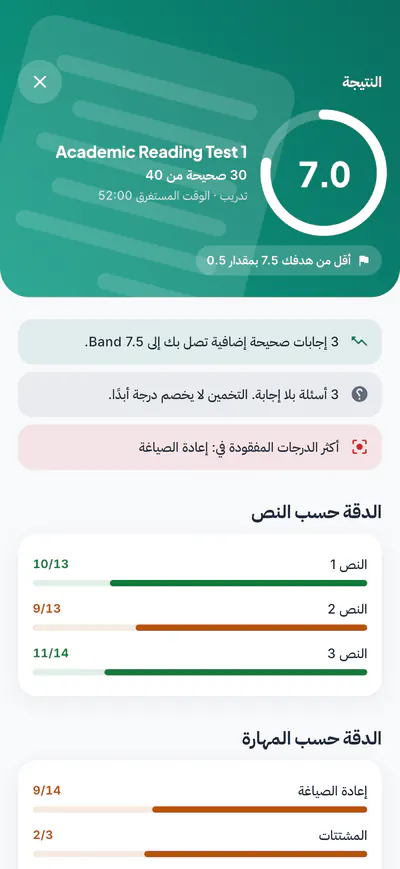
نتيجة اختبار IELTS تجريبي في تطبيق Fleydo: التحضير لـ IELTS: الدرجة التقديرية والدقة في كل جزء
درس تجريبي مجاني

اعرف درجتك الحقيقية في IELTS قبل الامتحان

درس فردي مجاني عبر الإنترنت مع معلم متحدث أصلي للإنجليزية، متخصص معتمد في IELTS بدرجة 8.5+. تحصل على تشخيص لقسم Speaking بالصيغة الحقيقية للامتحان، وتقدير صادق لدرجتك، وخطة تركز على المعايير التي تخسرك العلامات بالضبط. بدون دفع وبدون التزام.

عبر الإنترنت · فردي · Academic وGeneral Training

IELTS علامة تجارية مسجّلة لكل من British Council و IDP: IELTS Australia و Cambridge University Press & Assessment. هذه الاختبارات التجريبية من إعداد Fleydo، ولم تعتمدها هذه الجهات ولم تؤيدها.

تطبيق الهاتف

Fleydo English School في جيبكم

الدروس والواجبات والرسائل والألعاب لطلاب Fleydo وأولياء أمورهم. مجاني على iPhone وAndroid.

نزّله من App Storeاحصل عليه من Google Play
المزيد عن التطبيق
رمز QR يفتح تطبيق Fleydo English School في App Store أو Google Playامسحوا الرمز للتحميليفتح المتجر المناسب لهاتفكم.fleydo.com/app
أيقونة تطبيق Fleydo IELTS
Fleydo: التحضير لـ IELTS

هل تستعدون لاختبار IELTS؟

«Fleydo: التحضير لـ IELTS» تطبيق منفصل يضم اختبارات تجريبية في المهارات الأربع، ولا يتطلب استخدامه حساب Fleydo.

المزيد عن تطبيق IELTS
نزّله من App Storeاحصل عليه من Google Play
اختبارات IELTS تجريبية

تدريب على مهارات IELTS الأربع كلها

اختبارات عددها 311، مع درجة فورية وشرح للإجابات وإجابات نموذجية. بلا تسجيل.

كل الاختبارات التجريبية
FleyPath

خريطة طريق شخصية لطفلك — 3 أو 6 أو 12 شهرًا

🚀البداية
👋Hello
😊Body
🦁Animals
🔢Numbers
🏆إنجليزية واثقة
تدريب على الإنجليزية بأسلوب الألعاب

مثل اللعبة — لكنهم يتعلمون فعلًا